Top 5 London Street Photography Locations
London is one of the best cities in the world for street photography. Whether it’s your first time visiting or your tenth, the city constantly offers new scenes, changing light and unpredictable human moments to capture. From the kinetic neon streets of Chinatown to the brutalist geometry of the Barbican Estate, every part of London brings its own atmosphere, energy and photographic opportunities.
But knowing where to start can feel overwhelming. Especially when weather and lighting conditions can completely transform a location. In this guide, I’ll walk through the five London locations I keep returning to most, along with the conditions, compositions and moments that make each one so rewarding to shoot.
Chinatown, Soho
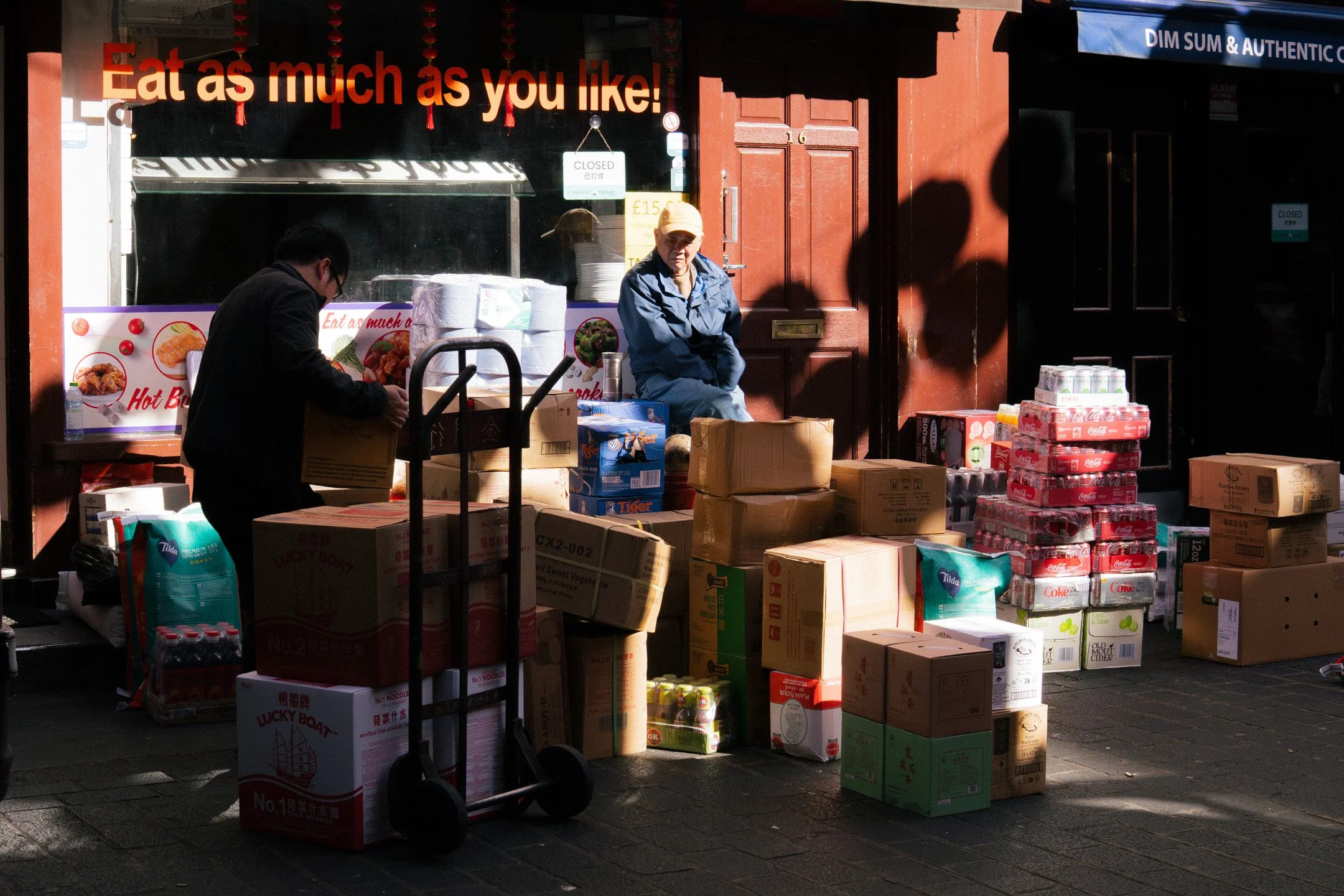
Chinatown is easily my favourite place to shoot street photography in London. I’ve yet to find another area in the city with such an abundance of interesting characters and authentic human moments. The district is built around a tight-knit community of restaurant owners, shopkeepers, chefs and service workers, all moving through streets filled with vivid colour, red lanterns and glowing neon signs.
I highly recommend visiting on a Saturday morning, especially under harsh sunlight. Around 10am, Chinatown begins to come alive as the area prepares for a busy weekend. Deliveries are unloaded from lorries, tables are set out for service, and in the quieter back streets you’ll often spot workers taking cigarette breaks between shifts. There’s a constant sense of movement and activity that makes the area incredibly rewarding to observe.
Late evenings — particularly on weekends — offer a completely different atmosphere but can be equally productive. The streets become densely packed with tourists, neon reflections begin to dominate the scene, and the area takes on a more chaotic energy. You’ll encounter waitresses calling people into restaurants, chefs working behind steamed-up windows, workers pausing between shifts and endless layers of colour, light and interaction.
No matter the time of day, Chinatown consistently offers some of the richest street photography opportunities in London.
Oxford Circus
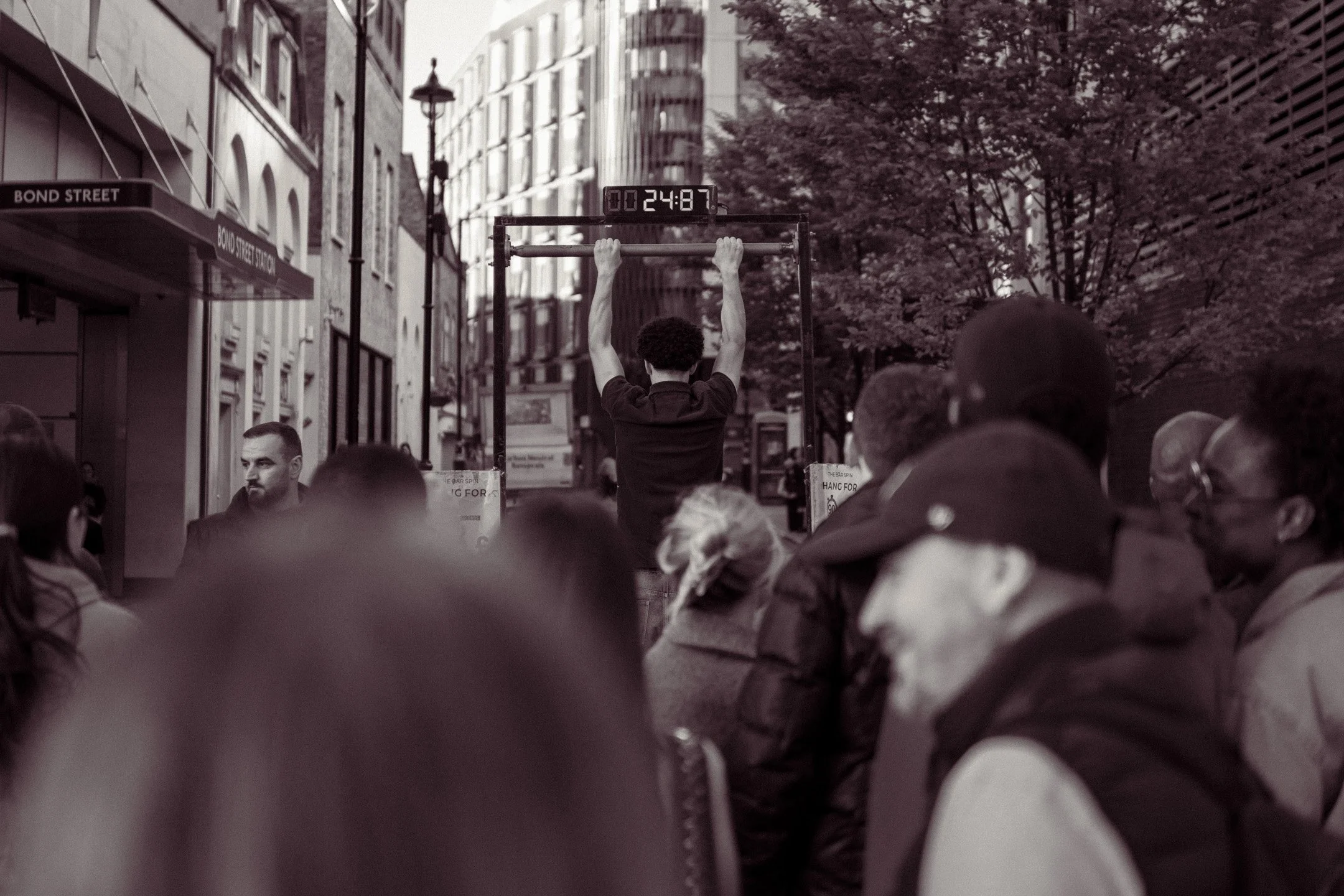
Oxford Circus is an area that often gets overlooked for street photography. Many photographers dismiss it as too crowded, too chaotic and lacking a distinct visual identity. To some extent, I understand why — if your goal is cinematic compositions dominated by architecture, there are stronger locations elsewhere in London.
However, if you’re more interested in human moments and the energy of everyday city life, Oxford Circus can be incredibly rewarding. This is one of the best places in London to capture the visual signals of the city itself: red buses passing through harsh light, black cabs weaving through traffic, underground signs, phone boxes and huge crowds moving through the streets.
The area is filled with street performers, buskers, food vendors, commuters and tourists from all over the world, creating a constant flow of unpredictable interactions and layered scenes. Some days can feel overly commercial or visually repetitive, while others produce an incredible variety of characters and moments within a short space of time.
For me, the best conditions to shoot around Oxford Circus are during golden hour on a busy Saturday afternoon, when warmer light begins to cut through the streets and the area feels at its most energetic.
Kensington
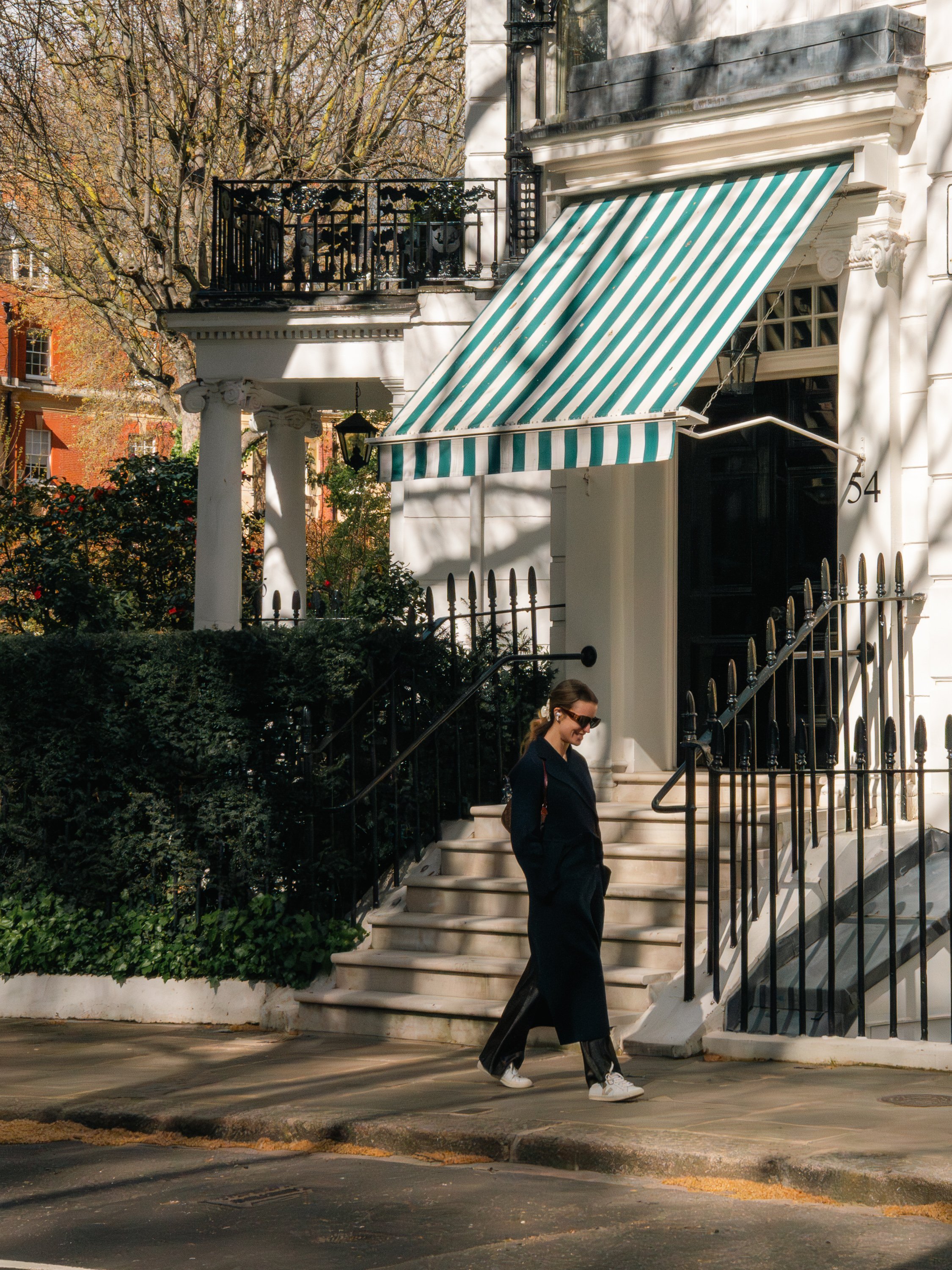
This is a part of London I rarely see included in street photography guides, which has always surprised me. While many photographers are drawn towards the chaos and intensity of more urban areas, I often find myself looking for softer, more elegant scenes and human moments and few places offer that better than South Kensington and Chelsea.
The streets here are some of my favourite in the city to simply walk and observe. White stucco townhouses, red brick architecture, elegant shopfronts, classic pubs and quiet café terraces create an atmosphere that feels timeless and distinctly London. There’s also an unmistakable sense of character in the people moving through these streets. Older gentlemen in tailored jackets, women dressed elegantly, classic hats, luxury cars parked along quiet roads and small everyday moments unfolding outside coffee shops.
Kensington covers a large area, but I’d strongly recommend focusing your time around South Kensington and Chelsea. The side streets here constantly reward observation, especially during spring and summer when the front entrances begin to blossom and softer evening light fills the streets. Visually, it’s one of the most cinematic and aesthetically rich areas in London for street photography.
Petticoat Lane
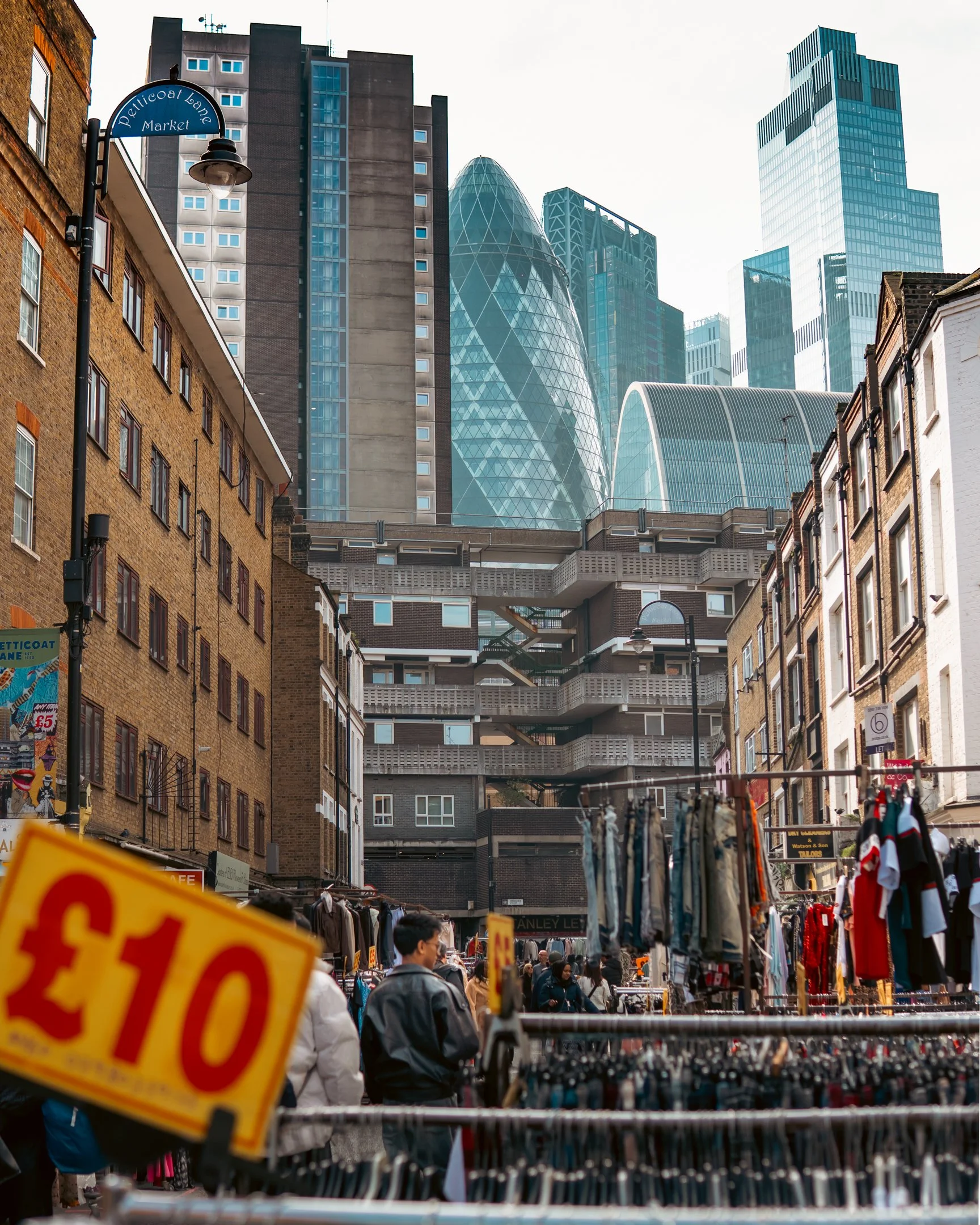
Petticoat Lane Market feels strangely overlooked in a lot of London street photography guides. I only discovered it myself after moving into a nearby flat and waking one Sunday morning to the sound of market traders setting up below my balcony. Curious, I walked over to see what was happening and immediately realised how visually rewarding the area was to photograph.
The biggest draw for me is the view looking down the lane itself. The market activity unfolds beneath a backdrop of the City skyline, where glass towers rise behind older brutalist architecture and tightly packed stalls. The contrast between old and new London creates layered scenes almost everywhere you look.
This is also a great place to experiment compositionally. I’d highly recommend shooting through objects around you — between coat hangers, through tote bag handles or past market frames and rails — to create extra depth and layers within your images. The density of the market makes this surprisingly easy to do.
Thanks to the surrounding architecture, the area works well in almost any conditions, but the market is at its liveliest between 10am and 1pm on Sundays. That’s when the streets feel busiest, loudest and most visually chaotic in the best possible way.
Barbican
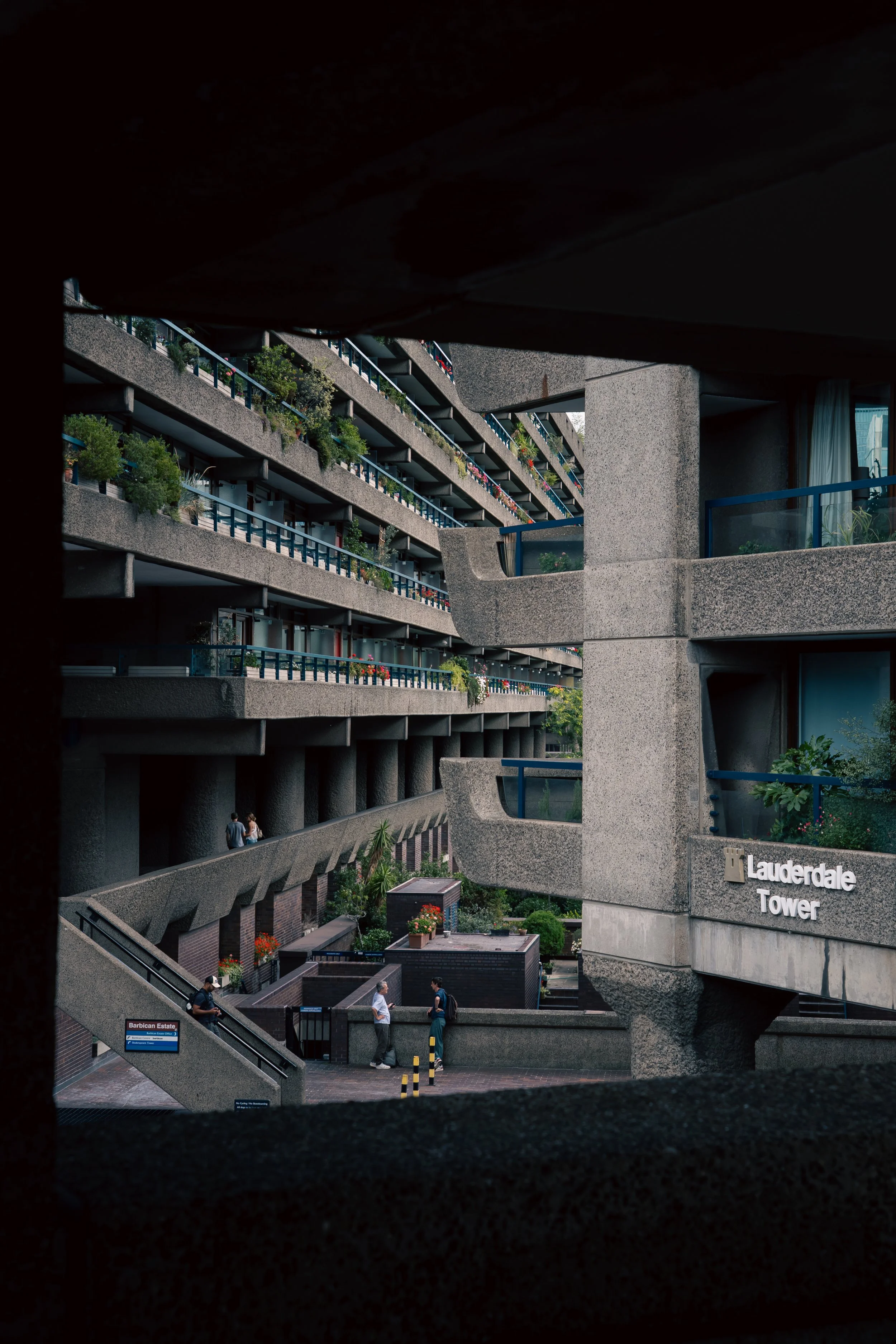
Barbican Estate is one of the most visually distinctive places in London to practice street photography, but it demands a very different approach compared to somewhere like Chinatown or Oxford Circus. Authentic human moments can be harder to come by here, which means patience becomes a huge part of the process. Rather than constantly reacting to fast-moving scenes, the Barbican rewards slowing down, observing carefully and waiting for the right subject to move into frame.
The estate’s brutalist architecture creates endless opportunities to experiment compositionally. Strong geometric shapes, repeating patterns, leading lines and layered walkways are everywhere, so it’s important to use the environment intentionally rather than simply documenting it. Look for ways to shoot through railings, gaps, windows and architectural frames to add depth and structure to your images.
Lighting conditions can completely transform the atmosphere here. Harsh sunlight works especially well, creating deep shadows and high contrast across the concrete surfaces, but overcast weather can be equally effective by emphasising the softer textures, tones and symmetry of the architecture. The key is patience — finding a composition first, then waiting for the right person, gesture or moment to complete the scene.